Counterfeit Analysis

Counterfeit Analysis Process Value Proposition

  • Record features of counterfeits caught by the authorities and delivered to the central bank and create a counterfeit knowledge database
  • Automated detection of counterfeits (Classification Process) in every known class of counterfeit
  • Identify new classes of counterfeits
  • Know the “fingerprint” of individual counterfeit banknotes
  • Access to specific information of origin and production methods that contributes to the tracing of counterfeiters
  • Discover new counterfeiting technology trends
  • Real time analysis. Reading and output available within seconds
  • Time saving by all analyses functionalities combined in one instrument
  • Sharing data with law enforcement institutes
  • Counterfeit Quality Rate module for rating the quality of a counterfeit using a percentile metric.

SF Counterfeit Analysis Technology main screen

Boosting Efficiency and Security with Snowfish

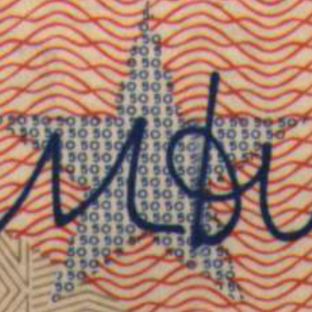
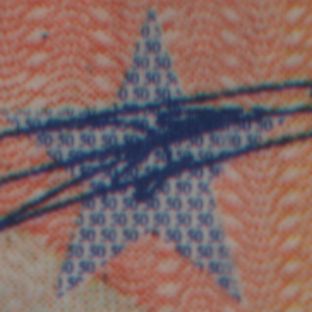
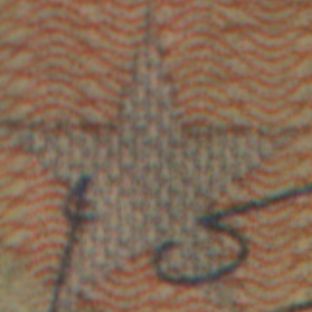
Microprint analysis

Microprint is a critical security feature that counterfeiters often struggle to replicate accurately. This comparison shows genuine banknote microtext alongside typical counterfeit reproductions:

  • High-quality imitations: Minor deviations in sharpness or alignment
  • Medium-quality attempts: Visible blurring or broken letterforms
  • Poor reproductions: Complete distortion or missing elements


Snowfish leverages advanced pattern recognition to objectively grade microprint quality—quantifying even subtle deviations that escape the human eye. By automating this analysis, it ensures consistent detection of forged microtext, whether the imitation is sophisticated or crude.

Genuine microprint

Genuine

Recognizable counterfeit microprint

‘Recognizable’ counterfeit

Poor imitation microprint

Poor imitation

Remarkable counterfeit microprint

Remarkable imitation

Line quality analysis

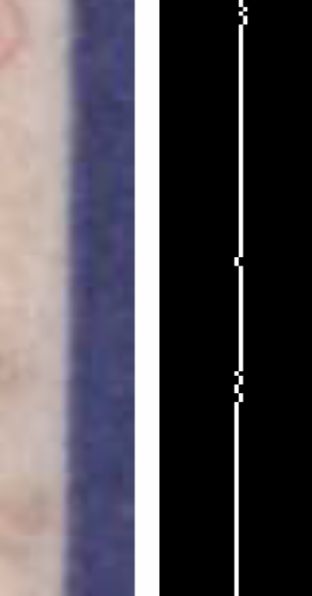
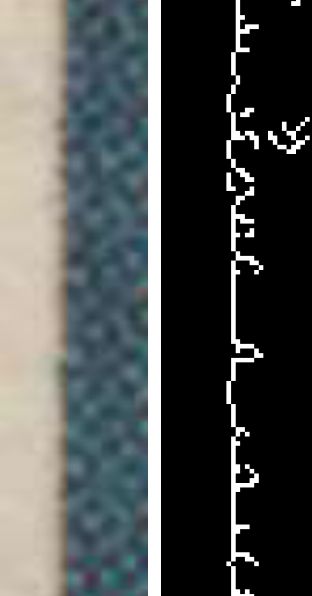
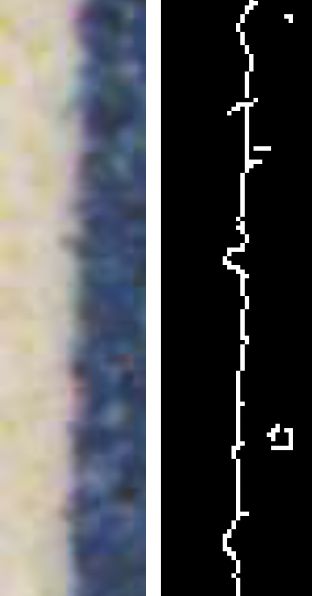
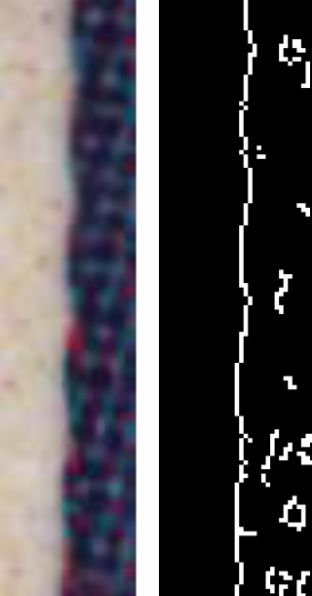
Line Quality Measurement Using Contour-Based Straightness Ratio
Line quality is assessed by comparing the actual path length of a line’s contour to the ideal straight-line distance between its endpoints.

The measured path is obtained by tracing the contour from the top to the bottom of the line.

The straight-line reference is the direct Euclidean distance between the topmost and bottommost points.

  • The line quality ratio is defined as:

Line Quality Ratio= Contour Length/Straight-Line Distance

  • A perfectly straight line yields a ratio of 1.00.

Counterfeit lines often exhibit in- and outward bulges, increasing the contour length and thus the ratio (e.g., 1.40).

In practice, even genuine but circulated or soiled notes typically remain below 1.01, preserving high line fidelity.

This metric provides a robust, quantitative method for detecting deviations from expected line geometry in high-resolution banknote images.

Genuine LQ =1

F3 LQ = 1.54

IJP LQ = 1.23

LP LQ = 1.07